

 rosa p. website
  Pattern

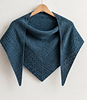
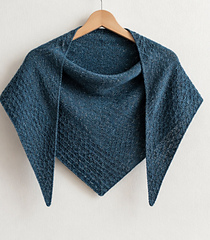


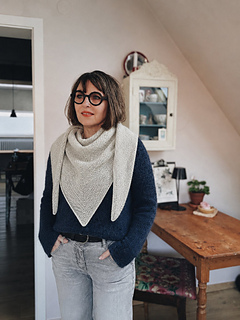

Kukka Shawl


Kukka Tuch
Der Kukka Shawl ist ein unkompliziert zu strickendes Dreieckstuch. Du startest in der Mitte der oberen Kante und strickst nach unten und außen. Die Zunahmen entstehen über Umschläge.
Im oberen Teil trägt das Tuch das typische kleine Reiskornmuster der Kukka-Kollektion. Im unteren Bereich wird es von einem zarten Zopfmuster eingerahmt. In der Anleitung zeige ich dir, wie du das Kukka Tuch in jeder von dir gewünschten Größe stricken kannst – vom kleinen Bandana bis zum großen Kuscheltuch.
Schwierigkeitsgrad
●●○○○
Größen
Zwei Größen (klein / groß)
Zusätzlich ist eine individuelle Größenanpassung in der Anleitung erklärt.
Nadeln
Rundnadel 4 mm, mindestens 100 cm lang.
Maschenprobe (zweifädig, gewaschen & gespannt)
10 × 10 cm glatt rechts = 20 M × 34 R mit Nadel 4 mm.
Die Maschenprobe ist für dieses Projekt nicht entscheidend, Abweichungen beeinflussen aber die benötigte Garnmenge und die Größe des Tuches.
Materialien
4 Maschenmarkierer, 1 Zopf- oder Hilfsnadel, Wollnadel, Maßband, Schere.
Garn
Kleines Tuch – zweifädig
(Einfädige Alternativen siehe ganz unten)
ITO Sensai
(60 % Mohair, 40 % Seide, LL ca. 240 m / 20 g) – Farbe 0333 Chestnut
→ 20 g
und ITO Urugami
(72 % Wolle, 28 % Papier, LL ca. 240 m / 40 g) – Farbe 219 Smoke Gray
→ 40 g
Großes Tuch – zweifädig (Variante A)
Drops Kid Silk
(70 % Mohair, 30 % Seide, Lauflänge ca. 210 m / 25 g)
→ 150 g
und Drops Flora
(65% Schurwolle, 35% Alpaka, Lauflänge ca. 210 m / 50 g)
→ 150 g
Großes Tuch – zweifädig (Variante B)
Lamana Premia
(60 % Mohair, 40 % Seide, LL ca. 300 m / 25 g)
→ 150 g
und Lamana Modena
(70 % Merino superfine, 30 % Kaschmir, LL ca. 335 m / 25 g)
→ 100 g
Garnalternativen mit Mengenangaben
Zweifädig: Mohair/Seide + Beilaufgarn
Richtwert:
klein: ca. 240 m Mohair + 240 m Beilauf
groß (Variante A): ca. 1275 m Mohair + 1200 m Beilauf
(Bei sehr feinen Beilaufgarnen wie Modena kann der Bedarf leicht abweichen.)
1) Mohair/Seide – wähle 1 (für beide Größen)
DROPS Kid-Silk (210 m / 25 g)
→ klein: ca. 30 g (2 × 25 g)
→ groß: ca. 150 g (7 × 25 g)
Sandnes Tynn Silk Mohair (212 m / 25 g)
→ klein: ca. 30 g (2 × 25 g)
→ groß: ca. 150 g (7 × 25 g)
Knitting for Olive Soft Silk Mohair (225 m / 25 g)
→ klein: ca. 25 g (2 × 25 g)
→ groß: ca. 140 g (6 × 25 g)
Isager Silk Mohair (212 m / 25 g)
→ klein: ca. 30 g (2 × 25 g)
→ groß: ca. 150 g (7 × 25 g)
BC Garn Silk Mohair (210 m / 25 g)
→ klein: ca. 30 g (2 × 25 g)
→ groß: ca. 150 g (7 × 25 g)
Kremke Silky Kid (210 m / 25 g)
→ klein: ca. 30 g (2 × 25 g)
→ groß: ca. 150 g (7 × 25 g)
Rowan Kidsilk Haze (210 m / 25 g)
→ klein: ca. 30 g (2 × 25 g)
→ groß: ca. 150 g (7 × 25 g)
Lang Yarns Mohair Luxe (175 m / 25 g)
→ klein: ca. 35 g (2 × 25 g)
→ groß: ca. 185 g (8 × 25 g)
Lamana Premia (300 m / 25 g)
→ klein: ca. 20–25 g (1 × 25 g reicht meist)
→ groß: ca. 105 g (5 × 25 g)
Pascuali Mohair Bliss (300 m / 25 g)
→ klein: ca. 20–25 g (1 × 25 g reicht meist)
→ groß: ca. 105 g (5 × 25 g)
2) Beilaufgarn – wähle 1 (für beide Größen)
DROPS Flora (210 m / 50 g)
→ klein: ca. 55 g (2 × 50 g)
→ groß: ca. 285 g (6 × 50 g)
DROPS Nord (170 m / 50 g)
→ klein: ca. 70 g (2 × 50 g)
→ groß: ca. 355 g (8 × 50 g)
DROPS Alpaca (167 m / 50 g)
→ klein: ca. 70 g (2 × 50 g)
→ groß: ca. 360 g (8 × 50 g)
DROPS Baby Merino (175 m / 50 g)
→ klein: ca. 70 g (2 × 50 g)
→ groß: ca. 345 g (7 × 50 g)
Sandnes Sunday (235 m / 50 g)
→ klein: ca. 50 g (2 × 50 g)
→ groß: ca. 255 g (6 × 50 g)
Knitting for Olive Merino (250 m / 50 g)
→ klein: ca. 50 g (1–2 × 50 g, je nach Rest)
→ groß: ca. 240 g (5 × 50 g)
BC Garn Bio Balance (225 m / 50 g)
→ klein: ca. 55 g (2 × 50 g)
→ groß: ca. 265 g (6 × 50 g)
Einfädig (statt zweifädig) – mögliche Garne
Wenn du das Tuch einfädig strickst, plane als groben Richtwert die Gesamtgrammzahl des zweifädigen Originals:
klein: ca. 60–80 g
groß: ca. 300 g (je nach gewünschter Größe auch mehr)
Garnalternativen für den Kukka Shawl
Bitte stricke vor Beginn unbedingt eine eigene Maschenprobe. Entscheidend ist, dass du die Maschenprobe von 20 M × 34 R glatt rechts auf 10 × 10 cm mit Nadel 4 mm erreichst. Der Verbrauch kann je nach persönlicher Maschenprobe und gewünschter Größe abweichen.
DROPS Karisma
(100 % Schurwolle)
Lauflänge ca. 100 m / 50 g
→ groß: ca. 300 g
Ein klassisches, griffiges Wollgarn mit klarer Maschenstruktur. Der Kukka Shawl wird formstabil, warm und alltagstauglich.
BC Garn Semilla
(100 % Bio-Schurwolle)
Lauflänge ca. 160 m / 50 g
→ groß: ca. 300 g
Eine weiche Bio-Wolle mit schöner, natürlicher Oberfläche. Der Shawl wird etwas leichter und weicher im Fall.
BC Garn Loch Lomond
(100 % Schurwolle)
Lauflänge ca. 150 m / 50 g
→ groß: ca. 300 g
Ein rustikales Donegal-Tweedgarn mit kleinen Farbnuancen. Besonders schön für einen lebendigen, etwas kernigeren Kukka Shawl.
Sandnes Garn Peer Gynt
(100 % norwegische Schurwolle)
Lauflänge ca. 91 m / 50 g
→ groß: ca. 300 g
Ein griffiges, langlebiges Wollgarn mit klarer Struktur. Der Shawl wird eher fest, warm und sehr formstabil.
Sandnes Garn Smart
(100 % Schurwolle)
Lauflänge ca. 100 m / 50 g
→ groß: ca. 300 g
Eine weichere, pflegeleichte Alternative für einen unkomplizierten Alltagsschalk. Das Maschenbild bleibt klar und gleichmäßig.
DROPS Lima
(65 % Wolle, 35 % Alpaka)
Lauflänge ca. 100 m / 50 g
→ groß: ca. 300 g
Lima macht den Kukka Shawl etwas weicher und wärmer. Durch den Alpakaanteil erhält er einen leichten Flaum, bleibt aber dennoch gut in Form.
DROPS Merino Extra Fine
(100 % Schurwolle)
Lauflänge ca. 105 m / 50 g
→ groß: ca. 300 g
Eine besonders weiche Alternative mit einem sehr gleichmäßigen Maschenbild. Schön für einen angenehm weichen Shawl direkt am Hals.
Sandnes Garn Duo
(55 % Merinowolle, 45 % Baumwolle)
Lauflänge ca. 115 m / 50 g
→ groß: ca. 250–300 g
Eine weniger warme Alternative mit Baumwollanteil. Der Kukka Shawl wird glatter, etwas schwerer im Fall und eignet sich gut für die Übergangszeit.
Kukka Shawl
The Kukka Shawl is an easy-to-knit triangular shawl. You begin at the centre of the top edge and work downwards and outwards. The increases are created with yarn overs.
The upper section features the small seed stitch pattern typical of the Kukka collection. The lower section is framed by a delicate cable pattern. The pattern explains how to knit the Kukka Shawl in any size you like – from a small bandana to a large, cosy shawl.
Difficulty level
●●○○○
Sizes
Two sizes (small / large)
The pattern also includes instructions for adjusting the size individually.
Needles
4 mm circular needle, at least 100 cm / 40 in long.
Gauge (held double, washed and blocked)
20 sts × 34 rows in stockinette stitch = 10 × 10 cm / 4 × 4 in with 4 mm needles.
Gauge is not essential for this project, but differences will affect both yarn requirements and the finished size of the shawl.
Notions
4 stitch markers, 1 cable needle or spare needle, tapestry needle, measuring tape and scissors.
Yarn
Small shawl – held double
(Single-strand alternatives can be found at the end.)
ITO Sensai
(60 % mohair, 40 % silk, approx. 240 m / 20 g) – colour 0333 Chestnut
→ 20 g
and ITO Urugami
(72 % wool, 28 % paper, approx. 240 m / 40 g) – colour 219 Smoke Gray
→ 40 g
Large shawl – held double (Option A)
DROPS Kid-Silk
(70 % mohair, 30 % silk, approx. 210 m / 25 g)
→ 150 g
and DROPS Flora
(65 % wool, 35 % alpaca, approx. 210 m / 50 g)
→ 150 g
Large shawl – held double (Option B)
Lamana Premia
(60 % mohair, 40 % silk, approx. 300 m / 25 g)
→ 150 g
and Lamana Modena
(70 % superfine merino wool, 30 % cashmere, approx. 335 m / 25 g)
→ 100 g
Yarn alternatives including yarn requirements
Held double: mohair/silk + companion yarn
Approximate yarn requirements:
small: approx. 240 m mohair/silk + 240 m companion yarn
large (Option A): approx. 1275 m mohair/silk + 1200 m companion yarn
For very fine companion yarns, such as Modena, the required amount may vary slightly.
1) Mohair/silk – choose 1 yarn for both sizes
DROPS Kid-Silk
(210 m / 25 g)
→ small: approx. 30 g (2 × 25 g)
→ large: approx. 150 g (7 × 25 g)
Sandnes Garn Tynn Silk Mohair
(212 m / 25 g)
→ small: approx. 30 g (2 × 25 g)
→ large: approx. 150 g (7 × 25 g)
Knitting for Olive Soft Silk Mohair
(225 m / 25 g)
→ small: approx. 25 g (2 × 25 g)
→ large: approx. 140 g (6 × 25 g)
Isager Silk Mohair
(212 m / 25 g)
→ small: approx. 30 g (2 × 25 g)
→ large: approx. 150 g (7 × 25 g)
BC Garn Silk Mohair
(210 m / 25 g)
→ small: approx. 30 g (2 × 25 g)
→ large: approx. 150 g (7 × 25 g)
Kremke Silky Kid
(210 m / 25 g)
→ small: approx. 30 g (2 × 25 g)
→ large: approx. 150 g (7 × 25 g)
Rowan Kidsilk Haze
(210 m / 25 g)
→ small: approx. 30 g (2 × 25 g)
→ large: approx. 150 g (7 × 25 g)
Lang Yarns Mohair Luxe
(175 m / 25 g)
→ small: approx. 35 g (2 × 25 g)
→ large: approx. 185 g (8 × 25 g)
Lamana Premia
(300 m / 25 g)
→ small: approx. 20–25 g (usually 1 × 25 g is sufficient)
→ large: approx. 105 g (5 × 25 g)
Pascuali Mohair Bliss
(300 m / 25 g)
→ small: approx. 20–25 g (usually 1 × 25 g is sufficient)
→ large: approx. 105 g (5 × 25 g)
2) Companion yarn – choose 1 yarn for both sizes
DROPS Flora
(210 m / 50 g)
→ small: approx. 55 g (2 × 50 g)
→ large: approx. 285 g (6 × 50 g)
DROPS Nord
(170 m / 50 g)
→ small: approx. 70 g (2 × 50 g)
→ large: approx. 355 g (8 × 50 g)
DROPS Alpaca
(167 m / 50 g)
→ small: approx. 70 g (2 × 50 g)
→ large: approx. 360 g (8 × 50 g)
DROPS Baby Merino
(175 m / 50 g)
→ small: approx. 70 g (2 × 50 g)
→ large: approx. 345 g (7 × 50 g)
Sandnes Garn Sunday
(235 m / 50 g)
→ small: approx. 50 g (2 × 50 g)
→ large: approx. 255 g (6 × 50 g)
Knitting for Olive Merino
(250 m / 50 g)
→ small: approx. 50 g (1–2 × 50 g, depending on leftovers)
→ large: approx. 240 g (5 × 50 g)
BC Garn Bio Balance
(225 m / 50 g)
→ small: approx. 55 g (2 × 50 g)
→ large: approx. 265 g (6 × 50 g)
Single strand instead of held double – suitable yarns
When working the shawl with a single strand, use the total approximate weight of the original held-double version as a rough guide:
small: approx. 60–80 g
large: approx. 300 g, or more depending on the desired size
Yarn alternatives for the Kukka Shawl
Please knit and wash a swatch before you begin. The important thing is to match the gauge of 20 sts × 34 rows in stockinette stitch over 10 × 10 cm / 4 × 4 in with 4 mm needles. Yarn requirements may vary depending on your personal gauge and the desired size of your shawl.
DROPS Karisma
(100 % wool)
Yardage approx. 100 m / 50 g
→ large: approx. 300 g
A classic, sturdy wool yarn with clear stitch definition. The Kukka Shawl will be warm, shape-retaining and suitable for everyday wear.
BC Garn Semilla
(100 % organic wool)
Yardage approx. 160 m / 50 g
→ large: approx. 300 g
A soft organic wool with a natural-looking surface. The shawl will be slightly lighter and have a softer drape.
BC Garn Loch Lomond
(100 % wool)
Yardage approx. 150 m / 50 g
→ large: approx. 300 g
A rustic Donegal tweed yarn with subtle colour flecks. Especially lovely for a lively, slightly more textured Kukka Shawl.
Sandnes Garn Peer Gynt
(100 % Norwegian wool)
Yardage approx. 91 m / 50 g
→ large: approx. 300 g
A sturdy, durable wool yarn with clear stitch definition. The shawl will be rather firm, warm and very shape-retaining.
Sandnes Garn Smart
(100 % wool)
Yardage approx. 100 m / 50 g
→ large: approx. 300 g
A softer, easy-care alternative for an uncomplicated everyday shawl. The stitch pattern remains clear and even.
DROPS Lima
(65 % wool, 35 % alpaca)
Yardage approx. 100 m / 50 g
→ large: approx. 300 g
Lima makes the Kukka Shawl a little softer and warmer. The alpaca content adds a slight halo while the shawl still keeps its shape well.
DROPS Merino Extra Fine
(100 % wool)
Yardage approx. 105 m / 50 g
→ large: approx. 300 g
A particularly soft alternative with very even stitch definition. Lovely for a soft shawl worn close to the neck.
Sandnes Garn Duo
(55 % merino wool, 45 % cotton)
Yardage approx. 115 m / 50 g
→ large: approx. 250–300 g
A less warm alternative with cotton content. The Kukka Shawl will be smoother, slightly heavier in drape and well suited for the transitional seasons.


 Ravelry download


 Cancel
49789 projects
stashed 29120 times
 stashed
91996 projects
stashed 45184 times
39516 projects
stashed 24010 times
2753 projects
stashed 1383 times
27816 projects
stashed 12497 times
513 projects
stashed 324 times
22177 projects
stashed 10454 times