

 In a Panda's World Ravelry store
 Pattern

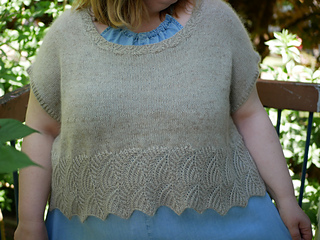
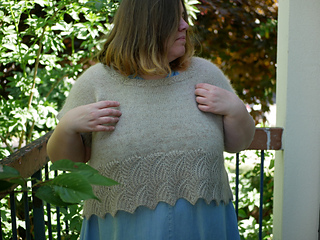
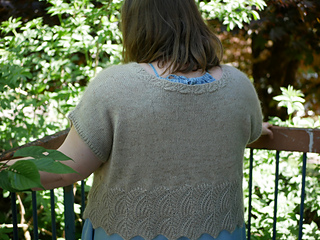
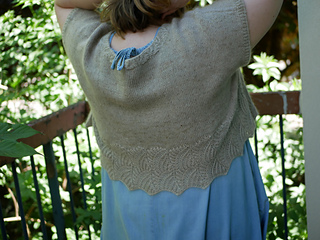
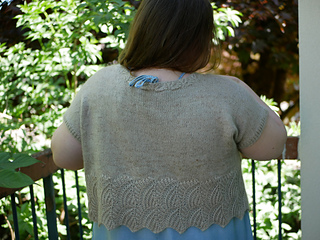
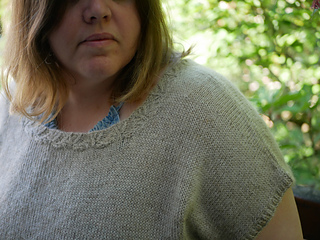
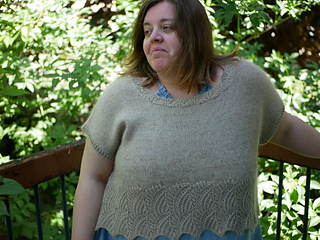
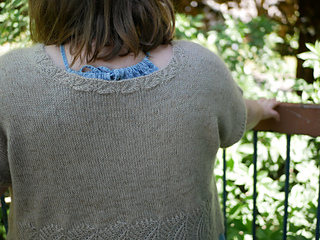
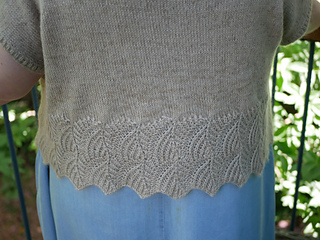
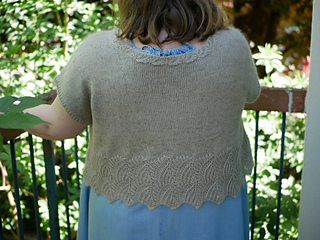
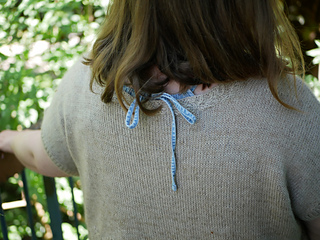
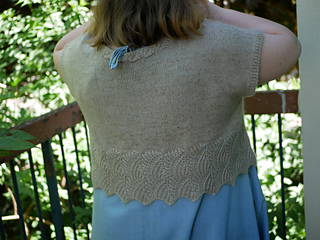
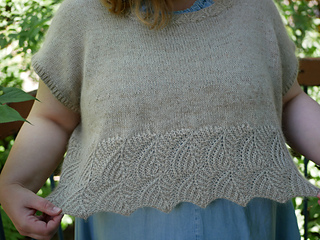
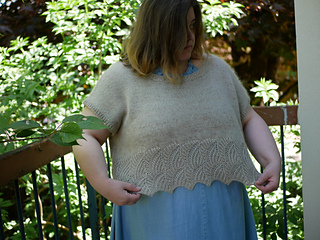
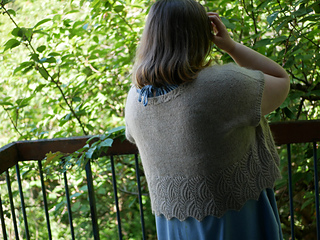
Tsih


ENGLISH
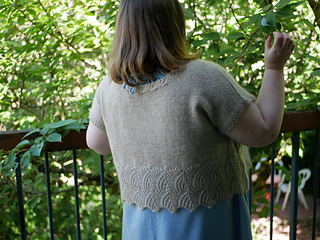
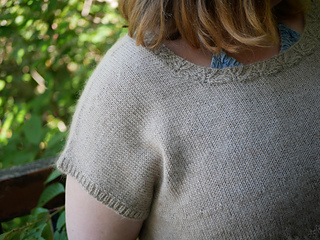
Tsih is a light spring sweater that highlights a ribbed stitch pattern with a briochelike effect. It is worked top-down, using a drop shoulder construction, mostly in the round.
The shoulders are worked first using a provisional cast-on, so they can later be joined with a three-needle bind-off. The body is then worked in the round and finished with mock brioche ribbing at the armholes and neckline.
This pattern is graded based on back width for a well-fitted look and offers three bust circumference options per size. Two neckline options are available: a round neckline with patterning, or a square neckline with ribbing. Instructions are also provided for adding long sleeves.
Materials
• Yarn: DK weight.
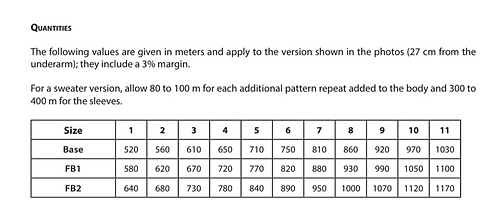
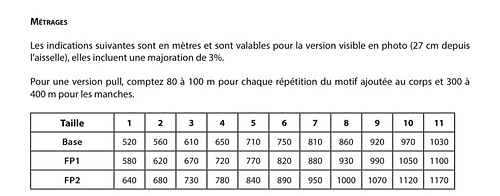
=> Check quantities on one of the last pictures on the left.
The sample was worked using one strand of Moher (70% mohair, 30% bombyx, 420 m / 50 g) held together with one strand of Fanore (100% alpaca, 400 m / 100 g), both from Sionnach Yarns.
Favor a combination of yarns with the same composition, meaning non-elastic fibers (alpaca, mohair, BFL), in a minimally variegated colorway if you wish to achieve the same effect as the original. You may also use a non-SW sport weight yarn or a SW DK yarn. Note that using SW merino will require significantly more yardage than indicated, as it is an elastic fiber.
• Circular needles: 3.75 mm for the main body. 3 mm for all finishing. One additional 3.75 mm needle for the three-needle bind-off at the shoulders.
• 17 to 31 stitch markers to separate pattern repeats if needed, and 3 markers for technical sections.
• Stitch holders.
• Scrap contrasting yarn for provisional cast-ons + a 4 mm crochet hook.
Sizes
Sizes available : (1, 2, 3) {4, 5, 6} [7, 8, 9] \10, 11\
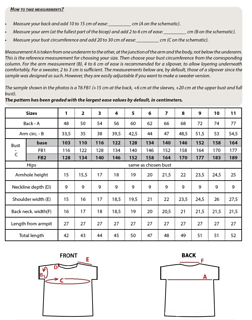
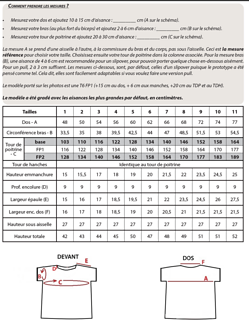
=> Check all measures and ease advice on one of the last pictures on the left.
The sample shown in the photos is a T6 FB1 (+15 cm at the back, +6 cm at the sleeves, +20 cm at the upper bust and full bust).
The pattern has been graded with the largest ease values by default, in centimeters.
Gauge
Washed, blocked, and dry:
• in stockinette stitch: 23 sts x 27 rows, 10 x 10 cm, in the round and flat.
• 1 pattern repeat: 14 sts x 24 rows = 7 cm wide and 8 cm high.
It is important to match the gauge to obtain the intended size.
Extra
-> Each technique used in this pattern has a video link. Those videos are in French, but easily understandable just by watching.
-> Some abbreviations are colored inside the rows to make the reading easier.
-> Motif is available as charts and row by row.
Skills
- knit in the round
- knit back and forth
- stockinette stitch
- 1/1 ribs
- knitting stitch from row below
- M1L, M1R, M1LP, M1RP
- P2tog, P3tog, K2tog, CDD
- short rows (wrap and turn method)
Level of difficulty according to test-knitters : 2.2/5.
Average of time of test-knitters : around 61 hours.
FRANCAIS
Tsih est un petit pull de printemps qui fait la part belle à un motif de côtes effet brioche. Il se tricote du haut vers le bas (top-down), selon une construction drop shoulders, essentiellement en rond.
On commence par les épaules, via un montage provisoire, afin de les rabattre à trois aiguilles plus tard. Puis on tricote le corps en rond et on termine en fausses côtes brioche aux emmanchures et à l’encolure.
Ce modèle est gradé selon la mesure dos pour un porté seyant et propose trois possibilités de tour de poitrine par taille. Deux encolures sont possibles : ronde avec motif, ou carrée avec des côtes. Des indications sont également données pour lui ajouter des manches longues.
Matériel :
• Fil : épaisseur DK
=> Voir métrages sur l’une des dernières images à gauche.
Le prototype a été tricoté avec un fil Moher ( 70% mohair, 30% bombyx, 420 m / 50 g) associé à un fil Fanore (100% alpaga, 400 m / 100 g), deux bases de Sionnach Yarns.
Privilégiez une combinaison de fils de la même composition, c’est à dire des matières non extensibles (alpaga, mohair, BFL), dans un coloris peu varié si vous souhaitez obtenir le même effet que l’original. Vous pouvez également utiliser un fil sport non SW ou DK SW. Notez que l’utilisation d’un mérinos SW demandera bien plus de métrage qu’indiqué car c’est un fil extensible.
• Aiguilles circulaires : 3.75 mm pour l’essentiel du corps. Des 3 mm pour toutes les finitions. Une troisième aiguille 3,75 mm pour faire le rabat à 3 aiguilles des épaules.
• 17 à 31 marqueurs pour distinguer les répétitions du motif au besoin, et 3 marqueurs pour les zones techniques.
• Des arrête-mailles.
• Un reste de fil contrastant pour faire les montages provisoires + un crochet 4 mm.
Tailles :
Les tailles disponibles : (1, 2, 3) {4, 5, 6} [7, 8, 9] \10, 11\
=> Voir le tableau de mesures sur l’une des dernières images à gauche.
Les mesures du tableau sont en centimètres et représentent les mesures du vêtement fini.
Le modèle porté sur les photos est une T6 FP1 (+15 cm au dos, + 6 cm aux manches, +20 cm au TDP et au TDH).
Le modèle a été gradé avec les aisances les plus grandes par défaut, en centimètres.
Échantillon
Lavé, bloqué et sec :
• en jersey : 23 m x 27 rgs, 10 x 10 cm, en rond et AR.
• 1 motif : 14 m x 24 rgs = 7 cm de large pour 8 cm de haut.
Il est important de respecter l’échantillon pour obtenir la taille attendue.
Bonus
-> Dans ce patron, toutes les techniques utilisées sont accompagnées d’une vidéo tutoriel.
-> Certaines abréviations sont colorées dans les rangs afin de faciliter la lecture.
-> Le motif est disponible en diagrammes et en rang par rang.
Techniques
- tricoter en rond
- tricoter en aller-retour
- jersey
- côtes 1/1
- maille tricotée dans le rang précédent
- rangs raccourcis (méthode de la maille enroulée)
- AITD, AITG, AITDenv, AITGenv
- 2 m ens. end., 2 m ens. env., 3 m ens. env.
Niveau de difficulté selon les testeuses : 2.2/5.
Temps moyen des testeuses pour le tricoter : 61h environ.


 Ravelry download


 Cancel
38 projects
stashed 38 times
 stashed
7 projects
stashed 15 times