

 Pascuali Collezioni on Ravelry
 Pattern


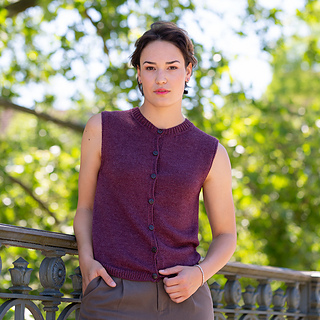
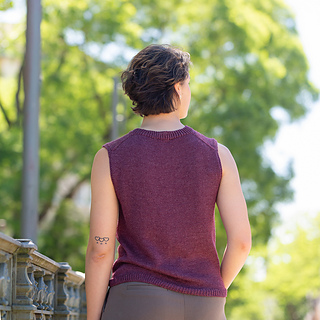
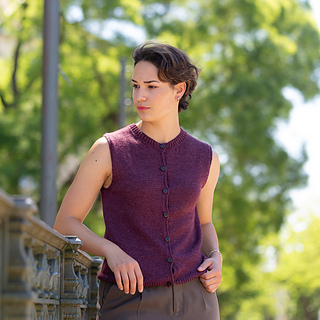
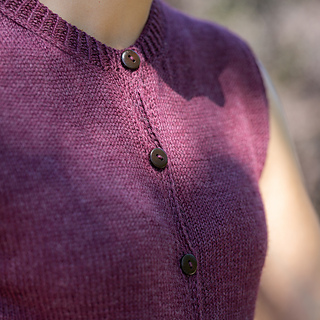
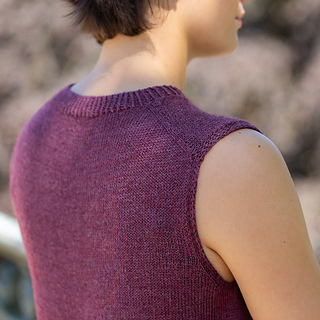
Tender Noon

DE
Die Weste TENDER NOON wird von oben mit einer europäischen
Schulter gestrickt. Dazu wird mit dem Rückenteil begonnen und
für die Schulterschrägen und Armausschnittblenden beidseitig
zugenommen. Die Maschen für die Vorderteile werden direkt
aus den Schulterschrägen des Rückenteils aufgenommen.
Das Vorderteil wird ohne Schulterschräge etwas länger als das
Rückenteil gearbeitet, dadurch sind die Armausschnittkanten
des Rückenteils wesentlich kürzer als die der Vorderteile. So
entsteht eine nach hinten verlagerte Schulterschräge mit
guter Passform. Nach den Armausschnitten werden die Teile
zusammengefügt, wobei die Knopfleisten direkt mitgestrickt
werden. Nach Fertigstellung werden die Knopflöcher
nachträglich eingearbeitet, damit sie an die gewünschte Länge
angepasst werden können.
Größen
Die Größen entsprechen folgendermaßen dem Brustumfang:
( XS; S; M ) ( L; XL; XXL ) ( 3XL; 4XL; 5XL ) = ( 76; 82; 90 ) ( 98; 107; 117 ) ( 127; 137; 147 ) cm Brustumfang (an deinem Körper ausmessen).
Die Weste hat eine schmale Passform mit geringer Mehrweite.
Beispiel: Wenn du einen Brustumfang von 90 cm hast, dann strickst du die Weste in Größe M und sie sitzt mit einer Mehrweite von 6 cm angenehm locker.
Du brauchst:
Pascuali Pinta (60% Schurwolle, 20% Maulbeerseide, 20% Ramie)
Lauflänge 50 g ~ 212 m:
( 3; 3; 4 ) ( 4; 5; 5 ) ( 6; 6; 7 ) x 50 g Knäuel in Farbe #115 Burgunder
Rundstricknadel ø 3,5 mm
Rundstricknadel ø 3 mm (für die Bündchen)
oder entsprechend der Maschenprobe
Häkelnadel ø 3 mm
( 7; 7; 7 ) ( 7; 7; 7 ) ( 8; 8; 8 ) Knöpfe à ø 15 mm
Maschenmarkierer
Maschenraffer oder Garnreste zum Stilllegen von Maschen
Wollnadel und Schere
EN
The TENDER NOON vest is worked from the top down with a European shoulder. You begin with the back section and work increases on both sides for the shoulder diagonals and the armholes. The stitches for the front sections are picked up directly from the shoulder diagonals on the back. The front sections are worked somewhat longer than the back and without shoulder diagonals, making the back armhole edges shorter than those on the front. This shifts the shoulder diagonals to the back to achieve a good fit. After completing the armholes, you join the sections together, working the button and buttonhole bands directly onto the front sections. The buttonholes are added at the end so they can be adjusted to the desired length of the garment.
Sizes
The sizes correspond to the bust circumference as follows:
( XS; S; M ) ( L; XL; XXL ) ( 3XL; 4XL; 5XL ) = ( 30; 32.2; 35.4 ) ( 38.6; 42.1; 46.1 ) ( 50; 54; 58 )“ (= ( 76; 82; 90 ) ( 98; 107; 117 ) ( 127; 137; 147 ) cm) bust circumference (measured on the body).
The vest has a slim fit with slight positive ease.
Example: If your bust measurement is 35“ (90 cm), make the vest in size M and it will have a comfortably loose fit with 2.4“ (6 cm) of positive ease
You need:
Pascuali Pinta (60% virgin wool, 20% mulberry silk, 20% ramie)
Yardage 1.76 oz ~ 232 yds (50 g ~ 212 m):
( 3; 3; 4 ) ( 4; 5; 5 ) ( 6; 6; 7 ) x 50 g balls in color #115 Burgundy
US 4 (3.5 mm) circular needle
US 2.5 (3 mm) circular needle (for the borders)
or needle size required to get gauge
US 3 (3 mm) crochet hook
( 7; 7; 7 ) ( 7; 7; 7 ) ( 8; 8; 8 ) buttons à ø 0.6“ (15 mm)
Stitch markers
Stitch holder or waste yarn for putting stitches on hold
Tapestry needle and scissors


 Ravelry download


 Cancel
2151 projects
stashed 1586 times
 stashed